
Garage Door Repair & Installation
Double Garage Door or Two Single Doors? What Actually Matters
Published 12 August 2026
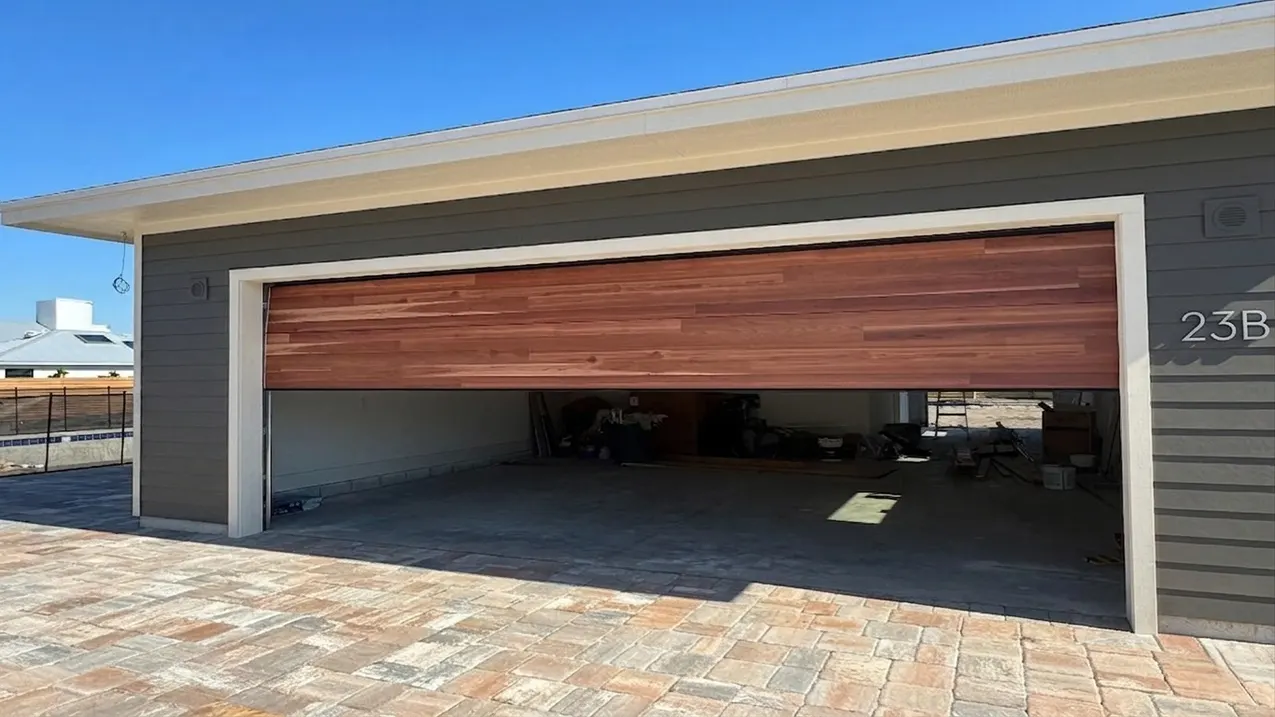
Anyone building or renovating a double garage runs into this decision: one wide door spanning both bays, or two separate standard-width doors side by side. It looks like an aesthetic choice, but the practical differences are bigger than they first appear.
On upfront cost, a single wide door usually comes out cheaper than two full separate doors. You're buying one door and one motor instead of two of each, and there's one installation instead of two. But that single door needs a heavier structural lintel above the opening to span the extra width safely, and it needs a higher-torque motor rated for the extra size and weight. Skimping on either is where wide doors go wrong, sagging over time or a motor that's constantly straining.
Two single doors cost more overall but are more modular in every practical sense. Each door and motor is a standard size, which means standard parts, standard pricing, and no special-order components. If one motor fails or one door gets damaged, the other bay is completely unaffected and still usable, which matters more than people expect until the day it happens.
Security and access management is the other real difference. Two doors mean two remotes (or double the handsets to keep track of), two sets of photo-eye sensors, and two points where something can go wrong electronically. One wide door is a single point of entry to manage, which is simpler, but also means a single fault locks out the whole garage rather than half of it.
Architecturally, a single wide door reads as more contemporary and is common on newer builds designed around it from the start. Two doors are the traditional default and are sometimes the only realistic option where the structural opening is already split by a centre support pillar that isn't load-bearing-removable without significant work.
If you're undecided, the questions worth answering on-site are: how wide is the opening, is there adequate headroom for a wide door's rail and higher-torque motor, can the existing lintel take the extra span or does it need reinforcement, and what's the actual budget difference once a heavier-duty motor is priced in rather than assumed.
Converting an existing double garage from two doors to one wide door (or the reverse) after the house is already built is a structural job, not a simple door swap. It usually means removing or adding a centre support, which is a different scope and quote entirely from a straightforward door replacement.
Key points
- A single wide door is usually cheaper upfront but needs a heavier lintel and a higher-torque motor
- Two single doors cost more but keep one bay usable if the other needs repair
- Converting between the two after the build is structural work, not just a door swap
Ready to get this sorted?
Free quotes, no pressure. Tell us what's going on and we'll take it from there.